Phantom Blade Zero Difficulty: Pick Your First Mode
Choose Wayfarer for the most approachable first playthrough, Pathbreaker for the middle initial challenge, or Hellwalker if you want the demanding preset from the outset. Phantom Blade Zero offers all three initially. Its unlockable 66 Days mode adds a limited-life challenge at Hellwalker difficulty: each death removes a day, and losing all sixty-six ends the run. Your ordinary first campaign does not use that challenge’s death allowance. [1] [2]
Which difficulty should you choose?
| Mode | Best starting fit | What to prioritize |
|---|---|---|
| Wayfarer | New action players or players mainly following the adventure | Recognize attacks, learn controls and enjoy progression |
| Pathbreaker | Players comfortable with real-time action | Balance observation, equipment and execution |
| Hellwalker | Players seeking the hardest initial preset | Consistent defense and deliberate punish windows |
| 66 Days | Players who have unlocked it and want a limited-life run | Route knowledge and minimizing deaths across the campaign |
These are choices about the experience you want. Wayfarer gives a newcomer more room to understand an unfamiliar system; Hellwalker is a better fit when learning under pressure is part of the appeal. The official FAQ roughly equates the initial modes with Easy, Normal and Very Hard. It does not give a numerical table of enemy multipliers, so choosing by those invented percentages would be misleading. [1] [2]
What makes the combat challenging?
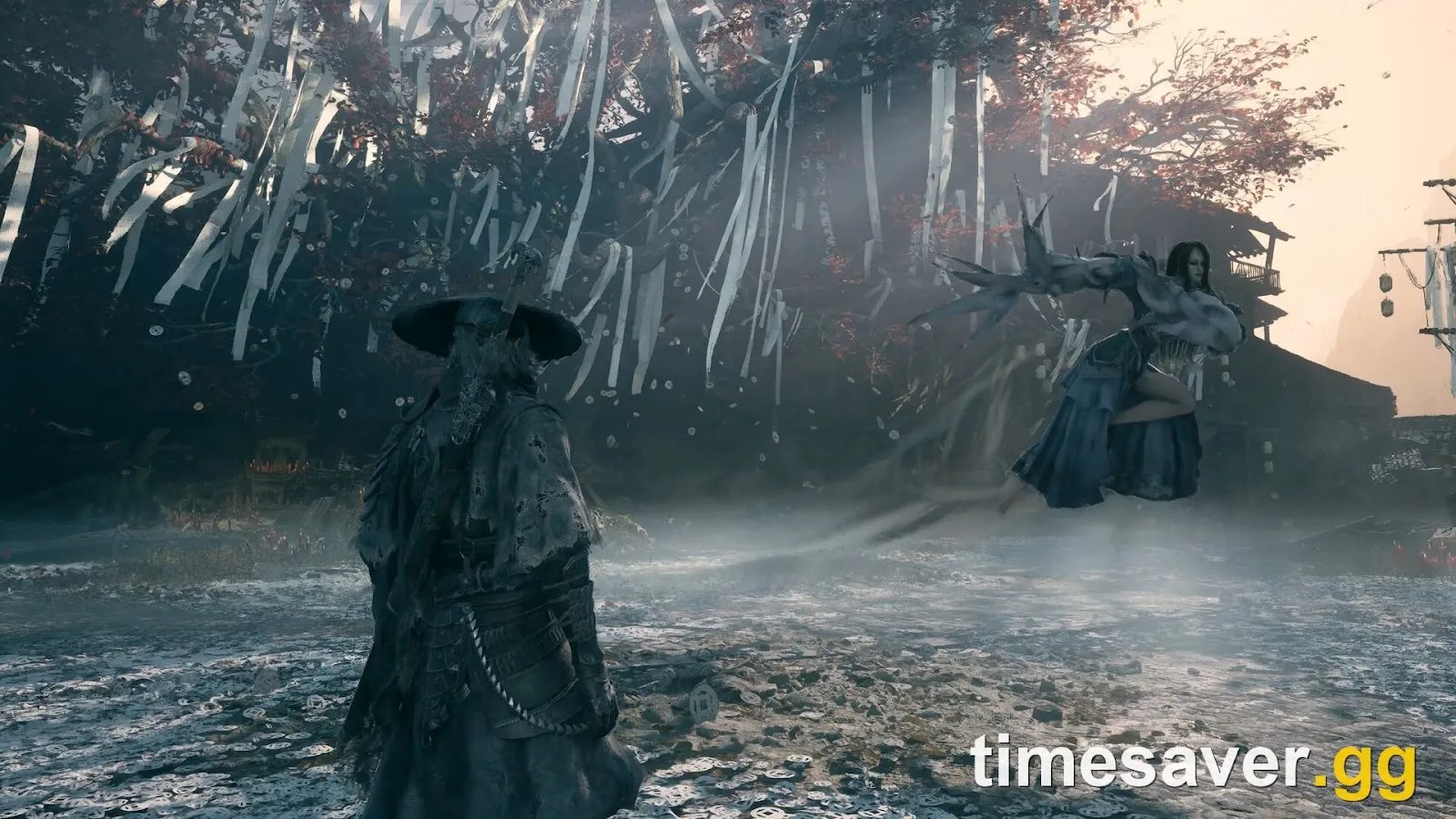
The central challenge is recognizing a sequence before committing to your own attack. Passive guarding consumes Sha-Chi. Blue attack cues call for a parry response and red attacks require evasion. A successful defense creates room to attack, while a long premature combo can leave Soul recovering as the next blow arrives. [3] [4]
Weapon familiarity matters as much as a recommendation on a tier list. Learn the first few attacks, the reach of the weapon and how long Soul remains committed after a strike. A weapon that feels manageable lets you spend attention on the enemy. A complicated weapon you barely understand adds a second learning problem to an already difficult fight.
Treat repeated deaths as information about one particular decision. If you always get hit after the second swing, watch for a continuation. If you lose control after guarding a long string, look at the Sha-Chi gauge. If every punish ends in a trade, shorten it. Each change targets a visible cause rather than asking you to “play better” in general.
A routine for a boss that blocks you
- Enter one attempt focused on observing the opening sequence. Keep enough distance to see the full animation.
- Identify the move that actually catches you. Separate a missed parry, an exhausted guard and an overlong attack commitment.
- Use one short punish after the sequence ends. Repeat it until the opening is recognizable.
- Check your current weapon upgrades and equipped tools. Change one item at a time so you can judge the result.
- Choose the preset that supports the kind of run you want. Learning the encounter and adjusting its challenge can work together.
Equipped weapon switching can restore Sha-Chi when available, so it belongs in that routine alongside guarding and evasion. Use it deliberately around its availability, then return to reading the enemy. Repeatedly pressing the switch input while it is unavailable adds confusion at exactly the moment you need a clear response. [3] [4]
Does difficulty affect platinum planning?
The trophy roadmaps state that any difficulty can be used for the platinum. A trophy-focused first run can therefore use Wayfarer and concentrate on missable quest steps, optional objectives and collectible thresholds. A harder preset is a personal challenge choice rather than a prerequisite for that roadmap. [5] [6]
Choose your saving routine separately from your difficulty. Manual saves protect quest branches and major transitions; a lower preset cannot restore a quest stage that has already been missed. Read a checkpoint’s warning and keep a separate slot before advancing a region-changing event.
What does 66 Days count?
In the unlockable challenge, deaths deduct days from the allowance. The count is attached to failed attempts, not to hours spent reading a guide or exploring slowly. At zero days the playthrough ends. That makes route knowledge valuable: practice troublesome fights and learn quest travel before choosing a mode where every death consumes part of the run. [1] [2]
For a first playthrough, select the ordinary preset that suits your goals. For a later challenge, decide whether a campaign-wide failure allowance sounds rewarding. Keeping those decisions separate lets you enjoy the story’s urgency without treating your first adventure as a race against a calendar.
Related guides
Sources
- [1]Phantom Blade Zero - PS5 Games | PlayStation (US)
- [2]Phantom Blade Zero’s Difficulty Options Include a Unique Spin on Permadeath Mode
- [3]Phantom Blade Zero Combat Guide: Parry, Dodge, Guard Break and Executions Explained
- [4]Phantom Blade Zero Combat Guide: Sha-Chi and Parries
- [5]Phantom Blade Zero Trophy Guide & Roadmap
- [6]Phantom Blade Zero Trophy Guide & Platinum Roadmap – cookiemonster33 | WeHunt
Was this helpful?
Thanks for the feedback!