
Phantom Blade Zero Weapons: What to Use and Upgrade
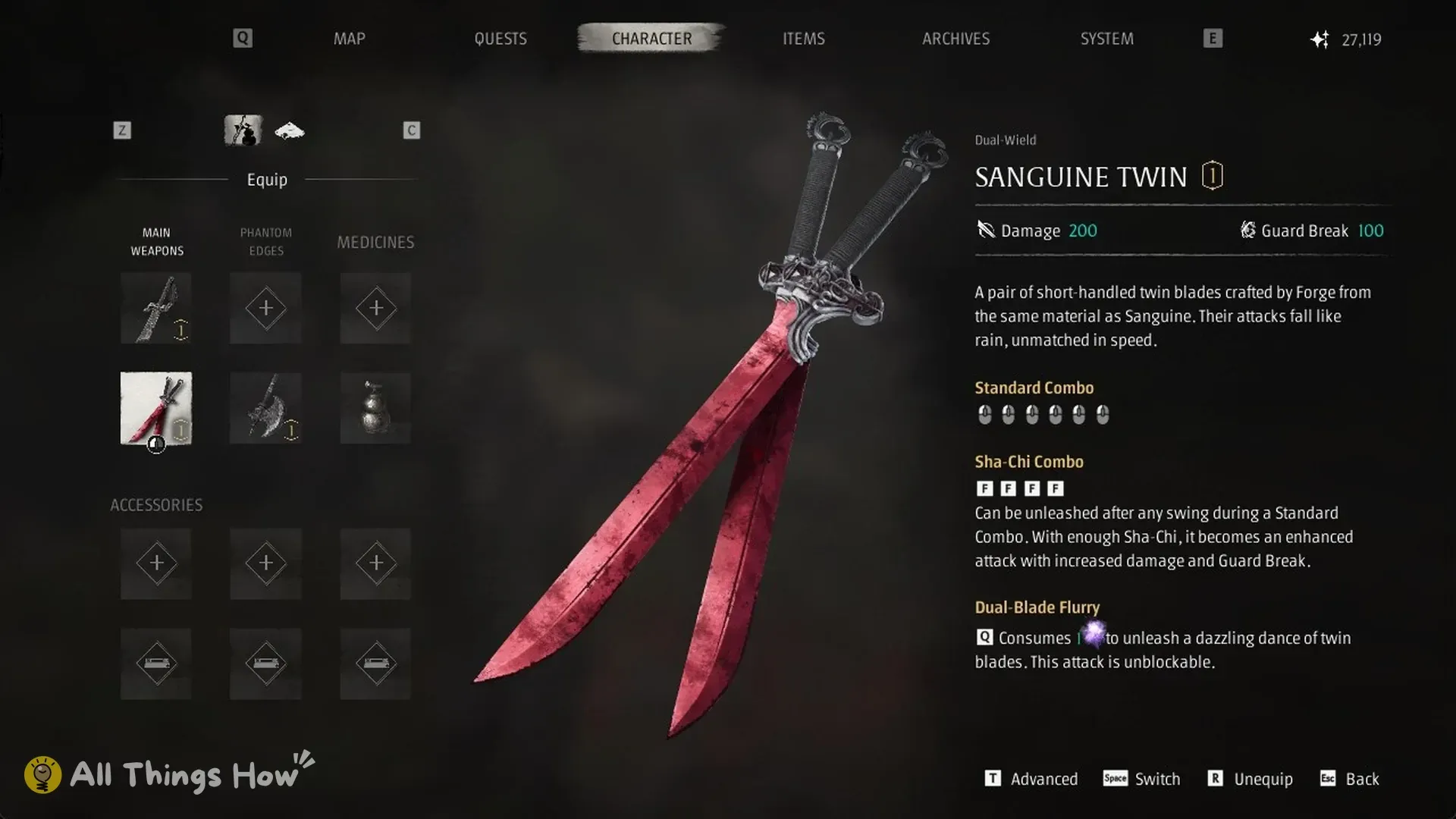
Choose one main weapon you can use reliably, then pair it with an option that changes your reach, speed or recovery. Jagged Steel is an early Bleed choice; Outlaw Warblade suits players who want its healing mechanic. Dread Axe is a Phantom Edge obtained through Peng Meng’s progression, so evaluate it in the special-tool slot. Ordinary upgrades can be recovered through reforging, while Soul Tempering is a separate decision involving a weapon-specific material. [1] [2]
Practical weapons and where they enter your route
| Weapon | Why try it | Acquisition or progression point | Main consideration |
|---|---|---|---|
| Jagged Steel | Early Bleed-oriented pressure | Early campaign availability | Learn how consistently you can maintain pressure |
| Dread Axe, a Phantom Edge | A special-tool option | Defeat Peng Meng in Weeping Creek Valley | Equip it in the appropriate tool slot |
| Outlaw Warblade | Health restoration through standard attacks | Jing Ye’s Forest encounter | Healing depends on using its mechanic effectively |
| Hunter’s Chain Sickle, a Phantom Edge | A special-tool option with reach | The Hunt at the end of the Valley route | Learn its tool function alongside your main weapons |
These are options for distinct situations, rather than a universal ranking. A slow weapon can punish a large opening effectively and feel awkward when the enemy allows only a brief hit. A fast weapon can suit short windows and still demand careful positioning. Jagged Steel’s Bleed appeal and the Warblade’s healing are discussed in the published weapon and build guides. [1] [3] [4]
Build around a problem you can identify
If you struggle to fit attacks between enemy sequences, prioritize a moveset with a short attack you can finish safely. If you survive comfortably but miss opportunities to pressure a broken enemy, test a heavier option during those larger windows. If ordinary exploration drains healing resources, evaluate the Outlaw Warblade’s healing mechanic in the encounters where it applies.
The healing effect has enemy-type conditions, so test it against the enemy you are actually fighting. A recommendation based on routine exploration should not be treated as guaranteed sustain in every boss arena. Likewise, the appeal of Bleed depends on whether you can land attacks consistently enough for that setup to work. [1] [4]
Use the second equipped main weapon to complement the first. Learn what the switch will put in your hands before using it under pressure. Because switching also supports Sha-Chi management, familiarity with both movesets improves defense as well as offense. [5] [6]
Upgrade priorities and recoverable materials
Upgrade the weapon you use for most encounters before spreading materials across several untested choices. After trying a replacement’s basic moveset, compare its upgrade needs with the materials available. Reforging lets you recover ordinary upgrade investment and move it to another weapon. Reviews and the weapon-system guide both describe this ability to experiment. [2] [7]
Read the current confirmation panel before resetting a high-level item. Ordinary upgrade refunds and a special transformation serve different purposes. Judge the choice on the displayed material cost, your available resources and whether you will actually use the resulting weapon. A complete level-by-level cost schedule is still needed to compare the total expense of every late-game alternative; the recommendations here do not supply that missing calculation.
Soul Tempering is a separate decision
Myst in Pangzhen performs Soul Tempering with a weapon-specific material and Remnant Dust. It adds a special enhancement or changes the weapon’s form, and the system guide describes the process as irreversible. Read the result before confirming. Recoverable ordinary upgrades are useful for testing; they do not establish that a Soul Temper transformation can be undone. [2] [8]
For Dread Axe progression, Four Fierce Axes matters beyond winning the Peng Meng fight. Collect its case files and complete the Child of Insight hand-in in Pangzhen to obtain the Blood-Oath Dagger used for the weapon’s tempering route. Keep quest completion and boss drops as separate checks when an expected upgrade is missing. [9] [10]
Accessories and later equipment
Reflex Device supports defensive timing and is found in a furnace at the Valley Sha-Chi Tower Base. Obtain the Sha-Chi Furnace Inspection Crank from the enemy reached below the Summit roof ladder, then use it on the furnace beside the Base bell. If you left the crank in the earlier furnace near 1st Floor, retrieve it before descending. These similarly named furnace stops make the bell name important. [4] [11] [12]
For each new accessory or weapon, identify the problem it solves, test it in a familiar encounter and keep it only when the benefit appears in your play. This gives you a dependable early loadout while leaving room to adopt later equipment once its acquisition, cost and mechanics are established.
Related guides
Sources
- [1]Phantom Blade Zero: Best Weapons and Where to Find Them | Push Square
- [2]List of All Weapons | Phantom Blade Zero (PBZ)|Game8
- [3]Phantom Blade Zero's best weapon might just be the first one you get | PC Gamer
- [4]Phantom Blade Zero: Best Build
- [5]Phantom Blade Zero Combat Guide: Parry, Dodge, Guard Break and Executions Explained
- [6]Phantom Blade Zero Combat Guide: Sha-Chi and Parries
- [7]Phantom Blade Zero Review – I got Soul, but I'm not a Soulslike | TheSixthAxis
- [8]Phantom Blade Zero Trophy Guide & Roadmap
- [9]Phantom Blade Zero: Four Fierce Axes walkthrough | PC Gamer
- [10]Phantom Blade Zero All Side Quests Guide
- [11]Best Early Game Build in Phantom Blade Zero: Weapons, Phantom Edges, Accessories and Where to Find Them
- [12]Phantom Blade Zero Weeping Creek Valley Collectible Locations
Was this helpful?
Thanks for the feedback!