
Is Phantom Blade Zero a Soulslike? What Playing It Involves
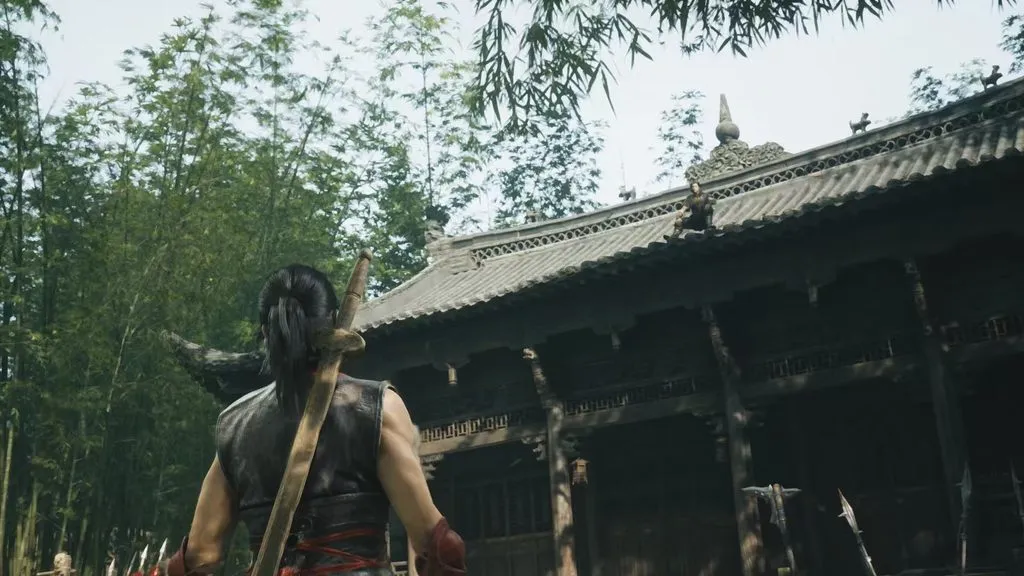
Phantom Blade Zero is a single-player wuxia action RPG with connected regions, challenging encounters and an emphasis on martial-arts weapon combat. The useful answer to “is Phantom Blade Zero a Souls like?” is to separate those features from expectations about fixed difficulty or a vast open world. You can select a difficulty, explore branching handcrafted areas and learn defensive timing while pursuing Soul’s story. Those concrete features tell you more about the experience than the label alone. [1] [2]
What kind of game is it?
You control Soul, a swordsman hunted after being framed for his master’s murder. His wounded heart leaves him sixty-six days to live, giving the adventure its central stakes. The campaign mixes fighting, navigation, equipment choices and side quests across the Wulin. The official presentation calls its blend of traditional martial arts and dark mechanical fantasy “Kungfupunk.” [1] [2]
Wuxia refers to the martial-arts setting and its world of fighters, loyalties and feuds. Action RPG describes what you do: move through environments, fight in real time and develop your equipment and abilities. For a new player, that means your success depends both on the choices you make before a fight and on how you respond during it.
Features behind the Soulslike comparison
| Feature | What to expect | How it affects your decision |
|---|---|---|
| Boss learning | Repeated observation and defensive timing | Enjoying improvement between attempts helps |
| World structure | Connected handcrafted regions with branches | Expect navigation and revisits alongside fights |
| Equipment | Different main weapons and special tools | Experimentation changes your approach |
| Difficulty | Wayfarer, Pathbreaker and Hellwalker initially | You can choose a more approachable first run |
| Campaign | Single-player, narrative-driven progression | Choose it for a solo adventure |
The world structure and demanding encounters explain the comparison. Selectable difficulty and the game’s emphasis on flowing weapon action also shape the experience. Reviewers describe equipment experimentation as a major attraction, including the ability to revert ordinary upgrades and try another weapon. [1] [3]
How combat feels in practice
An encounter asks you to alternate defense and pressure. Holding guard consumes Sha-Chi; reading an incoming sequence gives you better opportunities to parry, evade and attack. Blue and red cues help distinguish defensive responses. Once the enemy’s sequence ends, a controlled punish is easier to manage than committing to an entire combo whenever the enemy briefly pauses. [4] [5]
Weapon switching matters because it supports both resource management and a change in moveset. A slower weapon can suit a generous opening; a faster option can make a short opening easier to use. Learn the reach and recovery of each equipped weapon before judging it by damage alone. Reviews praising the combat focus on this variety and the pleasure of discovering how a weapon works. [3] [4]
Is it an open world?
The official FAQ describes handcrafted regions that connect into an explorable world, with branching paths, secrets and side quests. Think in terms of routes through distinct areas: explore a branch, find an obstacle, continue the main path and return when you have the relevant objective or tool. This structure rewards remembering landmarks and shortcuts. [1] [3]
That matters for pacing. A session may advance a quest or open a route without ending in a boss victory. Players who enjoy map knowledge and side stories get more from those stretches. Players primarily interested in fights should still expect travel and exploration between encounters.
Can a newcomer play it?
Wayfarer is the practical starting choice if you want more room to learn. Pathbreaker is the middle initial preset; Hellwalker asks for greater mastery. The separate unlockable 66 Days challenge uses deaths to reduce a limited-life allowance. The story’s sixty-six-day premise therefore does not force a new player to rush through the normal campaign on a real-world countdown. [1] [6]
Start by learning one dependable defensive response and one short punish. Add weapon switching once you can recognize the end of a sequence. This gives each attempt a clear purpose and makes the system easier to understand than trying to reproduce a trailer’s most elaborate combo immediately.
Is there multiplayer or co-op?
The official FAQ identifies Phantom Blade Zero as single-player with no multiplayer modes, and Steam lists single-player support. Choose it for a solo campaign. A friend can compare routes or give advice, but shared-party play is not part of the listed experience. If cooperative progression is your essential requirement, that feature decides the purchase more clearly than any genre comparison. [1] [2]
Related guides
Sources
- [1]Phantom Blade Zero - PS5 Games | PlayStation (US)
- [2]Phantom Blade Zero on Steam
- [3]Phantom Blade Zero Review – I got Soul, but I'm not a Soulslike | TheSixthAxis
- [4]Phantom Blade Zero Combat Guide: Parry, Dodge, Guard Break and Executions Explained
- [5]Phantom Blade Zero Combat Guide: Sha-Chi and Parries
- [6]Phantom Blade Zero’s Difficulty Options Include a Unique Spin on Permadeath Mode
Was this helpful?
Thanks for the feedback!